Based on 1,049 real HubSpot user reports across Reddit, Trustpilot, and forums
HubSpot
7.2
vs
Pipedrive
7.8
Strengths
2,000+ integrations vs Pipedrive's more limited ecosystem
All in one platform combining sales, marketing, and service
Free plan available with basic pipeline features
G2 rating of 4.4/5 from 12,390 reviews
Strengths
Best in class pipeline visualization with 9/10 feature score
Mobile app rated 8/10 with offline access for field sales
Trustpilot rating of 4.5/5 from 3,214 reviews
Predictable pricing from $14 to $79/seat without hidden fees
Weaknesses
Trustpilot rating of just 1.9/5 from 1,049 reviews
Pricing cliff from $20 to $90/seat plus $1,500 onboarding
Free plan gutted with 1,000 contact limit
Weaknesses
Reporting rated just 5/10 with no historical trending
No free plan and Lite tier lacks email sync
Add on costs for LeadBooster and Campaigns
The Verdict
Pipedrive takes the win with better user satisfaction scores and transparent pricing, while HubSpot's all-in-one approach comes with complexity and cost penalties.
Pros
2,000+ marketplace integrations with 2.5M+ active installs
Industry leading pipeline visualization with real time sync on free plan
Centralizes sales, marketing, and service in one platform
Powerful automation on Professional tier with AI assisted creation
Cons
Massive pricing cliff from Starter $20/seat to Professional $90/seat plus $1,500 onboarding
Free plan gutted with 1,000 contact cap and no automation
Critical features paywalled requiring Professional+ tier
Complex data migration creates vendor lock in
Pipedrive wins for sales teams that want pipeline excellence without complexity. At $14/seat, it delivers the best visual pipeline management we’ve tested. HubSpot’s all in one approach sounds appealing until you hit the $90/seat pricing cliff plus $1,500 mandatory onboarding.
But here’s the thing: if you need marketing automation and service tools, HubSpot’s integration makes sense. For pure sales? Pipedrive takes it.
Our analysis of 1,049 HubSpot complaints shows the same pattern: pricing surprises and feature paywalls frustrating teams who started with the free plan.
HubSpot vs Pipedrive: The Key Differences
Feature
HubSpot
Pipedrive
Winner
Pricing
Free to $100/seat
$14 to $79/seat
Pipedrive
Pipeline
9/10 feature score
9/10 feature score
Tie
Mobile
6/10 rating
8/10 rating
Pipedrive
Integrations
2,000+ apps
400+ apps
HubSpot
User satisfaction
1.9/5 Trustpilot
4.5/5 Trustpilot
Pipedrive
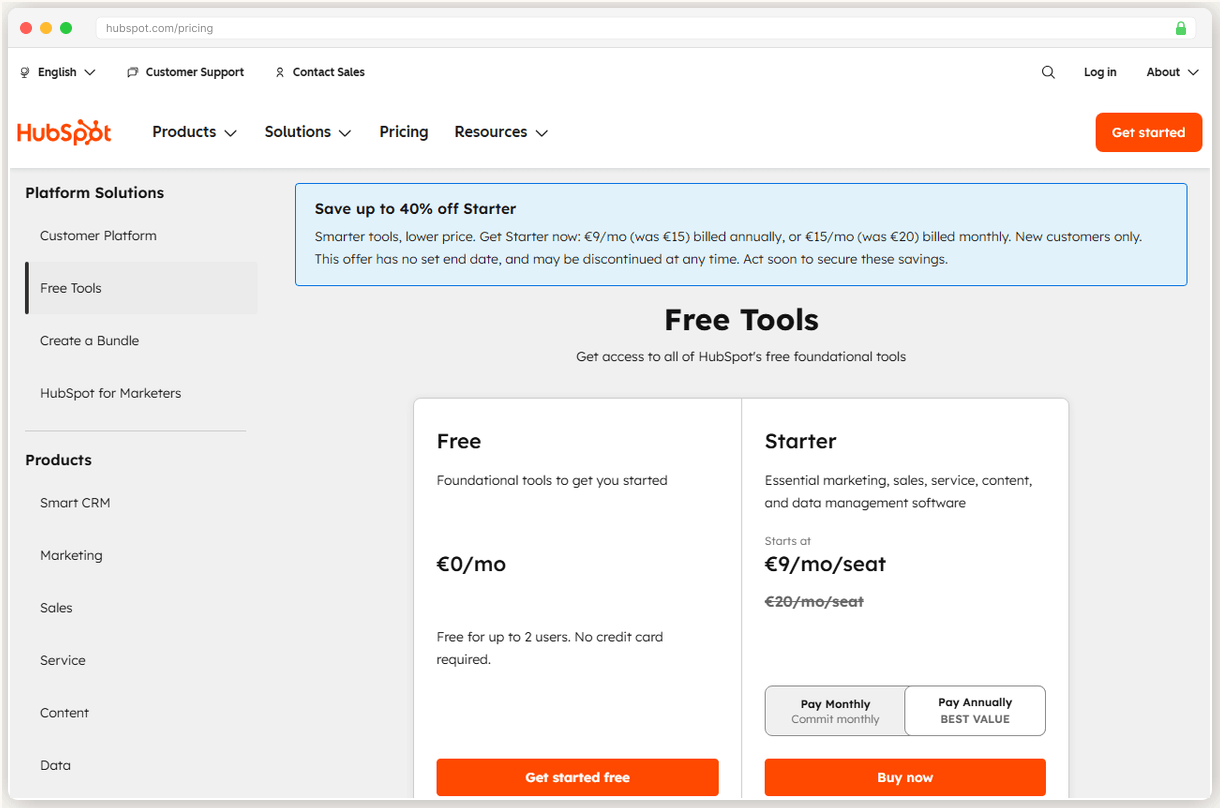
Pricing tells the real story. HubSpot’s free plan hooks you with 1,000 contacts and basic pipeline features. Need automation? That’s $100/seat on Professional. Pipedrive starts at $14 and scales predictably to $79 without surprise fees.
Trustpilot reveals the billing reality. HubSpot scores 4.4/5 on G2 but crashes to 1.9/5 on Trustpilot from over 1,000 reviews. Pipedrive maintains 4.5/5 across both platforms. The gap? Billing complaints hit Trustpilot harder than feature complaints.
Mobile matters for field sales. Pipedrive’s app gets 8/10 with offline access. HubSpot’s mobile experience scores just 6/10, and users mention sync delays in reviews.
What HubSpot Gets Right (and Wrong)
How many CRMs give you 2,000+ integrations on day one? HubSpot’s marketplace is massive, with 2.5M+ active installs across their ecosystem. The platform centralizes sales, marketing, and service with 360-degree contact views that actually work.
The free plan includes pipeline visualization that rivals paid tools. Professional tier automation creates sequences and workflows with AI assistance that saves hours of manual work.
But the pricing cliff is brutal. Starter at $20/seat jumps to Professional at $100/seat plus $1,500 mandatory onboarding. Critical features like email sequences and predictive scoring get paywalled until Professional+.
“Started free, got hooked, then hit with a $1,500 setup fee when we needed automation. Felt like a bait and switch.” - Trustpilot review
Data migration creates vendor lock in. HubSpot’s CMS integration runs so deep that switching requires rebuilding your entire marketing stack. Smart for retention, painful for customers.
Best for: Growing teams that start free and need sales, marketing, and service in one platform.
What Pipedrive Gets Right (and Wrong)
What makes Pipedrive special? The pipeline. Drag and drop deal cards, rotting alerts for stale opportunities, and activity based selling that keeps reps focused. Non-technical users get productive within hours, not weeks.
The mobile app shines for field sales with offline access and 4.5/5 ratings from 3,041 Capterra users. AI features like Pulse lead prioritization add genuine utility without feeling gimmicky.
Reporting is where it falls apart. No historical trending, basic analytics, and limited deal movement tracking. It’s the #1 complaint across review platforms. For a sales tool, that’s a problem.
Add-on pricing creep hurts. LeadBooster, Campaigns, Web Visitors, and Smart Docs all cost extra. The $14 Lite plan lacks two way email sync entirely. You’ll realistically need Growth at $39/seat for full functionality.
Pipedrive users rate support and billing satisfaction 4.5/5 on Trustpilot. That transparency matters when you’re trusting a tool with your entire sales process.
Best for: Small sales teams wanting the best visual pipeline without enterprise complexity.
The Real Cost
Pipedrive’s pricing is straightforward: $14 for Lite, $39 for Growth, $49 for Premium, $79 for Ultimate. No renewal surprises, no mandatory onboarding fees.
HubSpot starts free but reality hits fast. Need automation? Professional at $100/seat plus $1,500 onboarding. For a 5-person team, that’s $6,500 in year one vs Pipedrive’s $2,340.
The math changes if you need marketing tools. HubSpot replaces your CRM, email platform, and marketing automation. Pipedrive plus Mailchimp plus Zapier costs more than HubSpot Professional.
But for pure sales teams? Pipedrive delivers 80% of the value at 40% of the cost.
The Verdict
Pipedrive wins for sales focused teams. Better user satisfaction scores (4.5/5 vs 1.9/5 on Trustpilot), transparent pricing, and pipeline management that actually helps reps close deals.
Pick HubSpot if you’re building an integrated marketing and sales machine. The all in one approach works when you need it all. Just budget for the Professional tier from day one.
For everything else? Pipedrive gets the job done without the complexity or sticker shock.
Full Comparison
#
Provider
Best For
Price
Rating
1
Pipedrive
Top Pick
Small sales teams wanting the best visual pipeline without enterprise complexity
Yes, but it requires planning. Pipedrive offers migration assistance and CSV import tools, though you'll lose some HubSpot specific features like marketing automation workflows. The process typically takes 1-2 weeks for most sales teams.
Which is better for small sales teams?
Pipedrive wins for pure sales teams. At $14/seat, it's cheaper than HubSpot's $20 Starter plan and focuses entirely on pipeline management. HubSpot only makes sense if you need marketing and service tools too.
Which has better customer support?
Pipedrive has significantly better user satisfaction with 4.5/5 on Trustpilot vs HubSpot's concerning 1.9/5 rating from over 1,000 reviews. HubSpot's support complaints often mention long wait times and pushy upselling.
Is HubSpot's higher price worth it?
Only if you need the full marketing and service suite. For pure sales, HubSpot's pricing cliff from $20 to $90/seat plus $1,500 onboarding makes it 4x more expensive than Pipedrive's $39 Growth plan.
What do real users say about each platform?
G2 scores are close (HubSpot 4.4/5, Pipedrive 4.3/5), but Trustpilot tells a different story. Pipedrive users rate it 4.5/5 while HubSpot gets just 1.9/5, with complaints about pricing surprises and complex interfaces.
 Pipedrive
Top Pick
Pipedrive
Top Pick